Did you know that five years ago the government set July 27 as National River Day? The celebration contained in Government Regulation no. 38 of 2011 concerning the River is a way for the government to encourage and motivate people to care about the river. Because the river conditions in Indonesia have reached a very alarming point.
Research by the Directorate General of Pollution Control and Environmental Damage on 100 rivers in 33 provinces from 2013 – 2015 shows that 52 Indonesian rivers have heavy pollution levels. In addition, as many as 20 rivers have moderate-to-heavy pollution levels, and 7 rivers have mild pollution. Only 21 rivers meet the quality standards, and even then they have mild pollution levels.
More sadly, one of the areas with heavily polluted rivers is the Progo River, the Krasak River, the Sudu River, the Opak River, the Serang River, and the Tinalah River which is part of the Winongo River. All the rivers are in the Special Region of Yogyakarta.
Departing from concerns about the poor condition of the river in DI Yogyakarta, the UGM KKN team Donotirto Bantul Unit and UPN KKN team in collaboration with the Winongo Asri Communication Forum (FKWA) held an event to celebrate National River Day. The event was held on Saturday (07/28/2018) at Donotirto Village Hall, Bantul. It is indeed late a day from the National River day on July 27. But on the consideration of the participants’ willingness, this year’s event was postponed to 28 July.
National river daily bed by other environmental days hits
As a committee, our UGM KKN students have been preparing for the event since 06.30. The team consisting of 26 students worked together to prepare the location of the event. From folding flyers and posters to be shared with participants, arranging chairs, cleaning the area, installing billboards, and much more. Fortunately, the venue was ready before the participants began arriving at 8:00.
For this event, we invited Bantul and DIY government agencies, villagers around the Winongo river, members of the youth organization, and communities concerned with the river and the environment. Each participant who came to get merchandise from FKWA, in the form of shirts for participants of the workshop, hats, and bags for participants in the river stream.
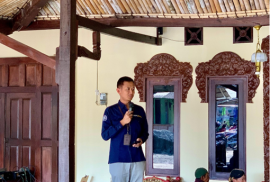
The event began an hour later, and was opened by Endang, Chair of FKWA. In his remarks, Endang questioned the rarely heard echoes of National River Day because it was buried by other environmental days that first hit. In fact, the river plays a very crucial role in human life because of its role as the only provider of fresh water. Unfortunately, humans often ina insult ’rivers by dumping trash and waste into rivers instead of glorifying them.
On that occasion, there was also the Deputy Regent of Bantul, Abdul Halim Muslih and Bambang Sugiarta, Head of the DIY PSDA Department of Energy and Mineral Resources of the Indonesian Ministry of Energy and Mineral Resources. In his remarks, Abdul Halim revealed the fate of es apes ’Bantul as the downstream owner of the Winongo river. As the last part of the river flow before going to sea, Bantul gets a lot of waste and pollution from the Sleman area and the City of Yogyakarta. This condition made Abdul encourage the people of Bantul to want to clean and maintain the quality of the river.
After the remarks, the event was continued with a gathering and river flow. The workshop is intended for residents, hamlet heads, and government agencies. While the river flow for members of the youth and the community caring for nature.
Torture the river
The workshop program was divided into two sessions. The first session was started by the Deputy Regent of Bantul. He stated, Bantul produced 600 tons of garbage. Unfortunately, only 200 tons can be processed properly so the rest goes into the river.
In the sharing session the Head of the Great Hall of the Opak River Serayu, Tri Bayu Aji reminded about the importance of rivers for human life. However, humans even torture the river by using river bodies for their own purposes. The ‘torture’ most often carried out by the community is the use of river bodies and garbage disposal.
According to Tri Bayu, for the prevention of river damage and pollution, it is necessary to educate the public to dispose of garbage in its place and urge residents who live on the banks of the river to back down their homes so that more water can be stored in the river.
Bambang Sugiarta, a waste-related problem, said that six major rivers in Yogyakarta had been contaminated with ecoli bacteria from solid waste and household and industrial wastewater.
Program of Stop Littering Irresponsibly that the government has been planned isn’t treated because of the septic flow of citizen tanks still flow to the river
In the question and answer session, Pugiyanto, the head of the UKKT said that residents always clean the river, but unfortunately there is no access to dispose of the trash. The same problem was also expressed by Oak Fajri, Head of Metuk Hamlet, Kretek. In addition, the program to stop open defecation that has been declared by the government has not been implemented because the flow of citizen septic tanks still flows into the river.
For the BAB issue, Ilham said the Bantul government was still implementing a privatization program. While for the waste program, Bambang said there are two waste management systems. Instead of the problem of dirt and household waste, the most worrying is that medical waste and factories are far more dangerous for river biota.
While about the building, Tri Bayu replied that the riverbank land could actually be used as a building, but not a permanent building. Large annual tree planting is prohibited.
The meeting session was closed with the idea of forming a river task force team tasked with maintaining the cleanliness of the river. However, to really be able to maintain the condition of the river, it takes effort and synergy between the community and the government.
River flow
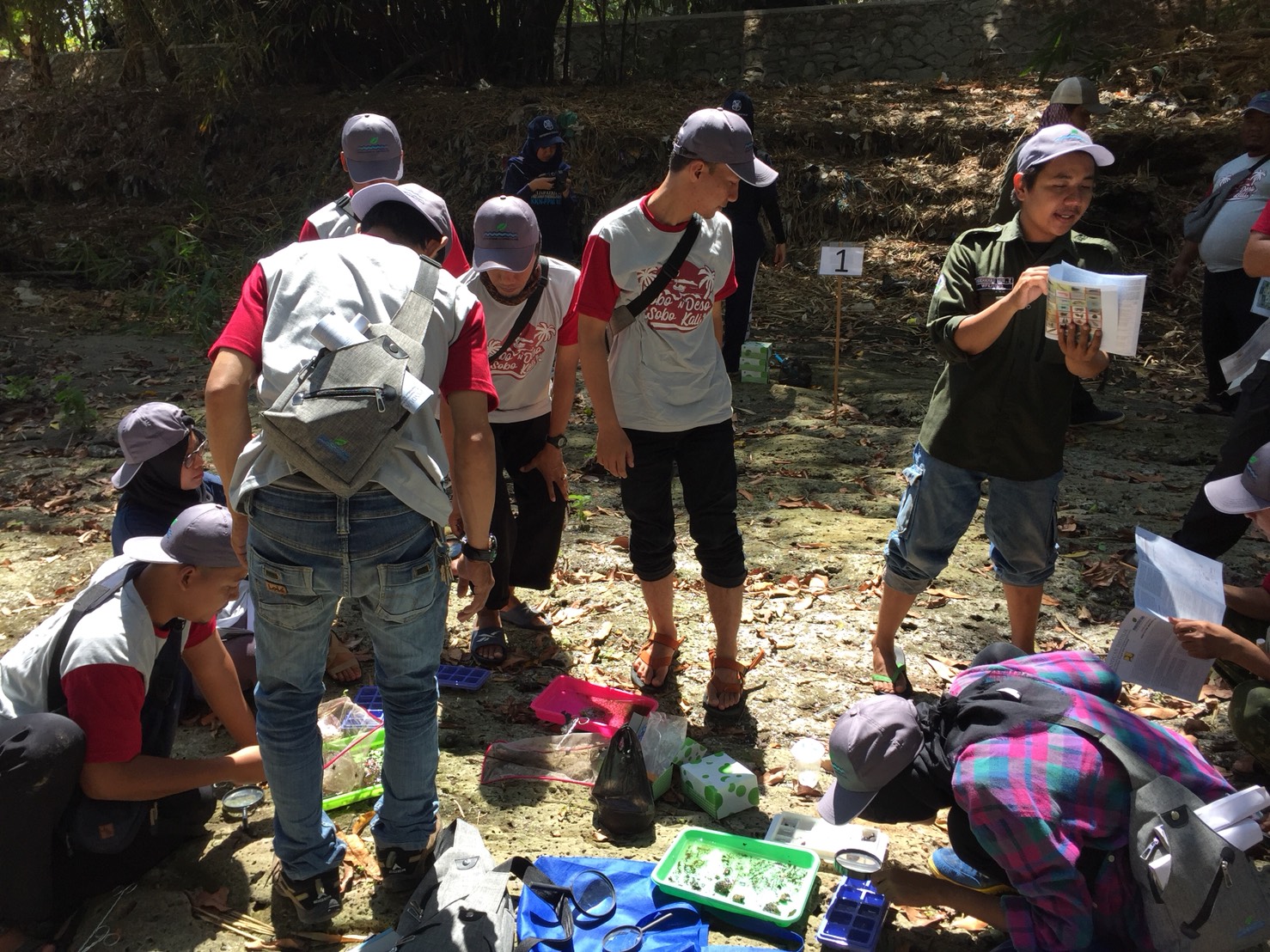
While the residents took part in the discussion, members of the youth organization and the natural care community joined the river stream program. In this program, participants around the Winongo river were guided by UGM KKN-UPN students. This program aims to introduce and open the eyes of participants about the condition of their rivers.
While walking along the river, participants were given education about the condition of the river through three posts. Posts 1 and 4 are biolithic posts administered by Indonesian Wild Water volunteer friends. In this post, participants were invited to look for river biota and then match them with local biota leaflets to identify river pollution levels. From the search for participants it was shown that the local biota was far less because it had been displaced by migrant biota.
The trail is continued to posts 2 and 3, namely the ecological post. There participants get an explanation of the relationship of each component in the food chain to form a river ecosystem. Then finally, posts 5 and 6 were filled by two members of the UGM KKN, Bondan and Metta. In this post participants get an explanation of the destructive power of water, the characteristics of water, the nature of water, the components of water pollutants, and much more.
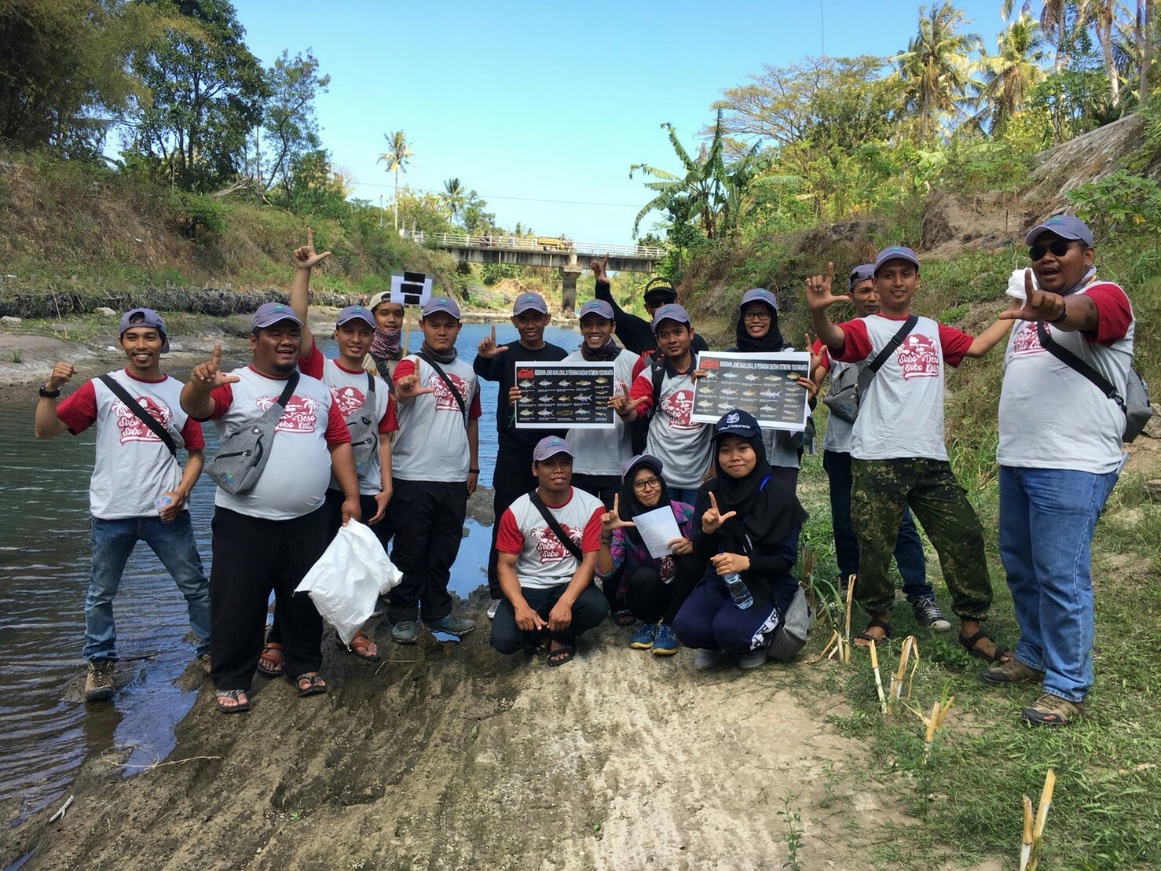
After completing the river, the participants returned to the Donotirto Village Hall for a discussion of the results of river flow. From the results of river flow and this discussion, it is expected that the community, especially in young people, will maintain the condition of the river so that its condition is better.
Let’s take care of the condition and health of our river!
(Source: https://muda.kompas.id/2018/08/01/menyelamatan-sungai-menjaga-masa-depan-bangsa/; translator: Harun Ardiansyah)