Using water that is brownish red for consumption, especially bathing, washing, and toileting (MCK) may never be imagined by most people who are accustomed to using clear water to meet their daily needs. But this is a fact that can easily be found in people who live on peat land. One of them is in Rasau Jaya District, Kubu Raya, West Kalimantan.
Although the community is accustomed to using peat water, but basically based on water quality standard parameters, peat water does not meet the requirements of clean water quality standards because it contains a variety of organic substances which cause water to be acidic, cloudy and smelly. If consumed directly, peat water can cause several diseases, including gastrointestinal, skin, eye, cholera, and dysentery. This condition makes peat water need special processing before it is ready for consumption.
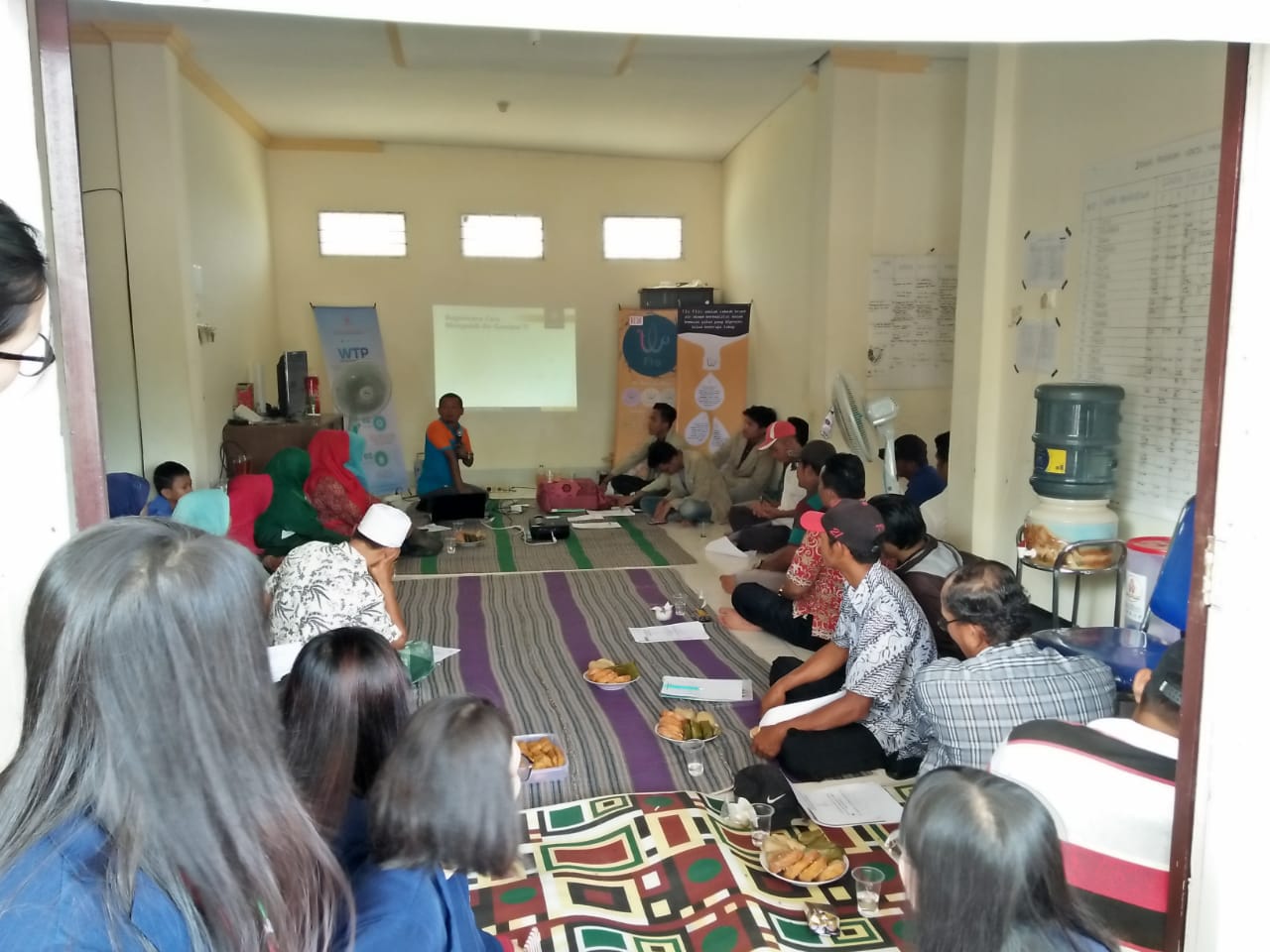
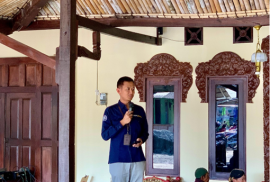
Responding to these problems, the KKN-PPM students Unit KB-006 Universitas Gadjah Mada 2018 socialized and built a model of water purification facilities at the UPT KTM Rasau Jaya Office. The effort was carried out with the device and the community of Rasau Jaya 1 Village, Rasau Jaya 2, Rasau Jaya 3, with guidance from PT. Amerta Wening Indonesia on July 23-30 2018. The program of information dissemination and counseling to make facilities went smoothly. Residents also welcomed enthusiastically. A total of 32 people attended the socialization event.
In simple terms, the water treatment process is carried out using poly-aluminum chloride (PAC) media and pH adjuster in a coagulation bath to precipitate impurities. The effort was perfected by the installation of filters containing silica sand and activated carbon to produce clear water.
Water purification technology is actually not new to the community, but the high cost of installation often makes them reluctant to treat peat water before consumption
Water purification technology is actually not new to the community, but the high cost of installation often makes them reluctant to treat peat water before consumption. They prefer to consume peat water directly.
To provide a solution to this problem, KKN-PPM UGM students present water distribution technology using manifolds to save the cost of making and installing water purification facilities up to a third of the usual price (around Rp. 9 million to Rp. 1.5 million – Rp. 2 million).
The media used for water purification such as sea shells, palm fiber, PAC, pH adjusters, silica sand, chlorine and activated carbon are also easily available in the surrounding environment at affordable prices. With these facilities, the water produced will have a pH level that is neutral, odorless and colorless so it is safe to use.
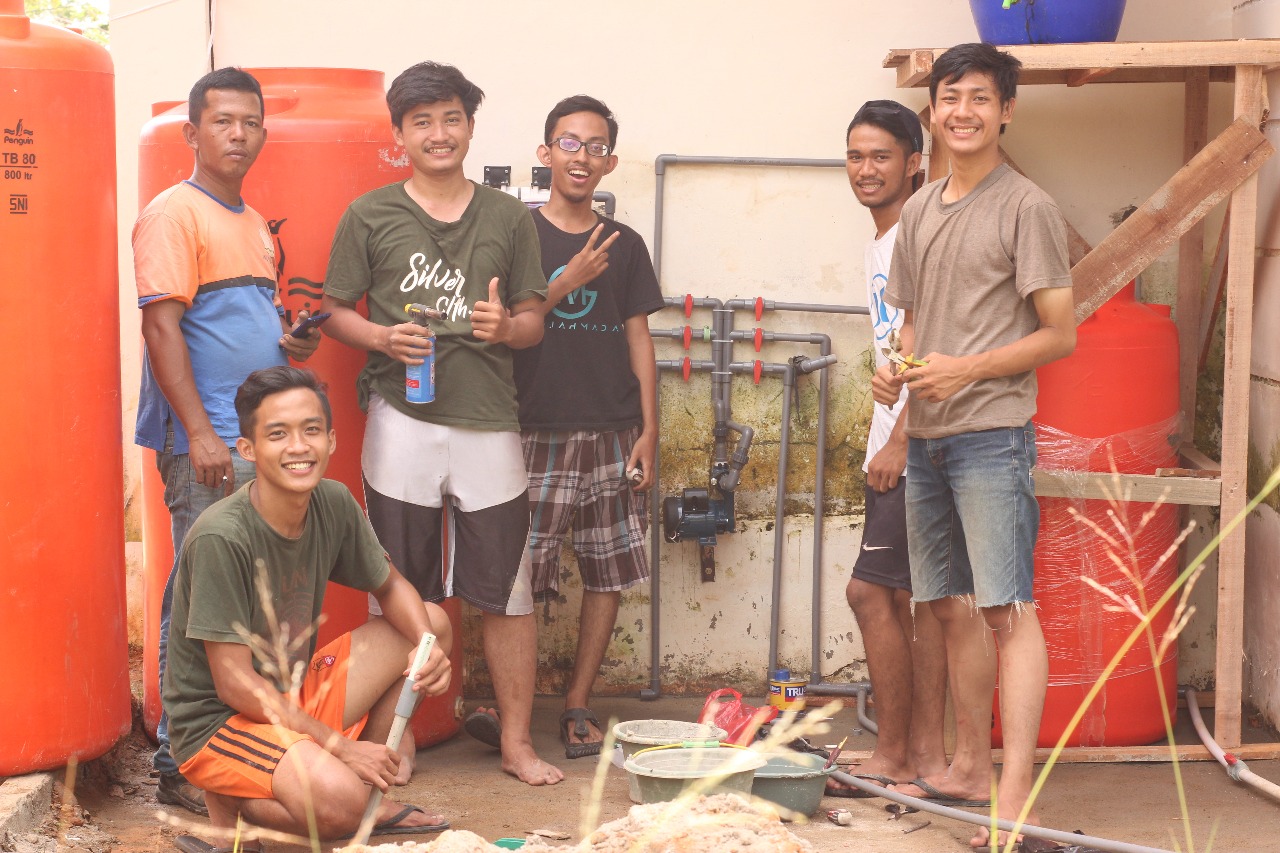
With the socialization and construction of water purification facilities organized by the KKN-PPM UGM 2018 team, it is expected that the Rasau Jaya community will be able to build inexpensive water purification facilities in their respective places to minimize the risk of disease due to direct use of peat water.
Water Purification Process
Peat water pumped from the well is flowed towards the first tank containing broken shells and palm fiber. The function of shellfish and palm fiber fractions to eliminate iron and manganese which makes water rust. Before entering the tank, running water is also given chlorine to kill bacteria.
After passing through the first tank, the water is then flowed to the reservoir to be carried out by the coagulation process (clumping and deposition of impurities). In a tub of coagulation, water is given a PAC solution and pH adjuster manually to neutralize the acid level in the water and precipitate the impurities contained in the water. This process takes about 30 minutes for a tank measuring 1 cubic (1000 liters) of water.
Processed water is then separated from the sediment by flowing into the clean water storage tank while passing through a filter tube containing silica sand and activated carbon. The function of both media is to remove the smell and brownish red color on the water. While the sediment containing dirt is flowed into the sewer. The water that has been drained into the clean water storage tank is then ready for use.
(Source: https://muda.kompas.id/2018/07/31/mahasiswa-ajari-warga-bangun-fasilitas-pemurnian-air-di-rasau-jaya/; translator: Harun Ardiansyah)